If a pipe burst or a fire tore through drywall and framing in your American Fork home, call FIX Restoration at (801) 930-9750 to start the rebuild conversation. The company answers that line 24/7, is licensed and insured, and carries a 4.9-star Google rating across 558 reviews from Utah County homeowners who’ve been through the same thing.
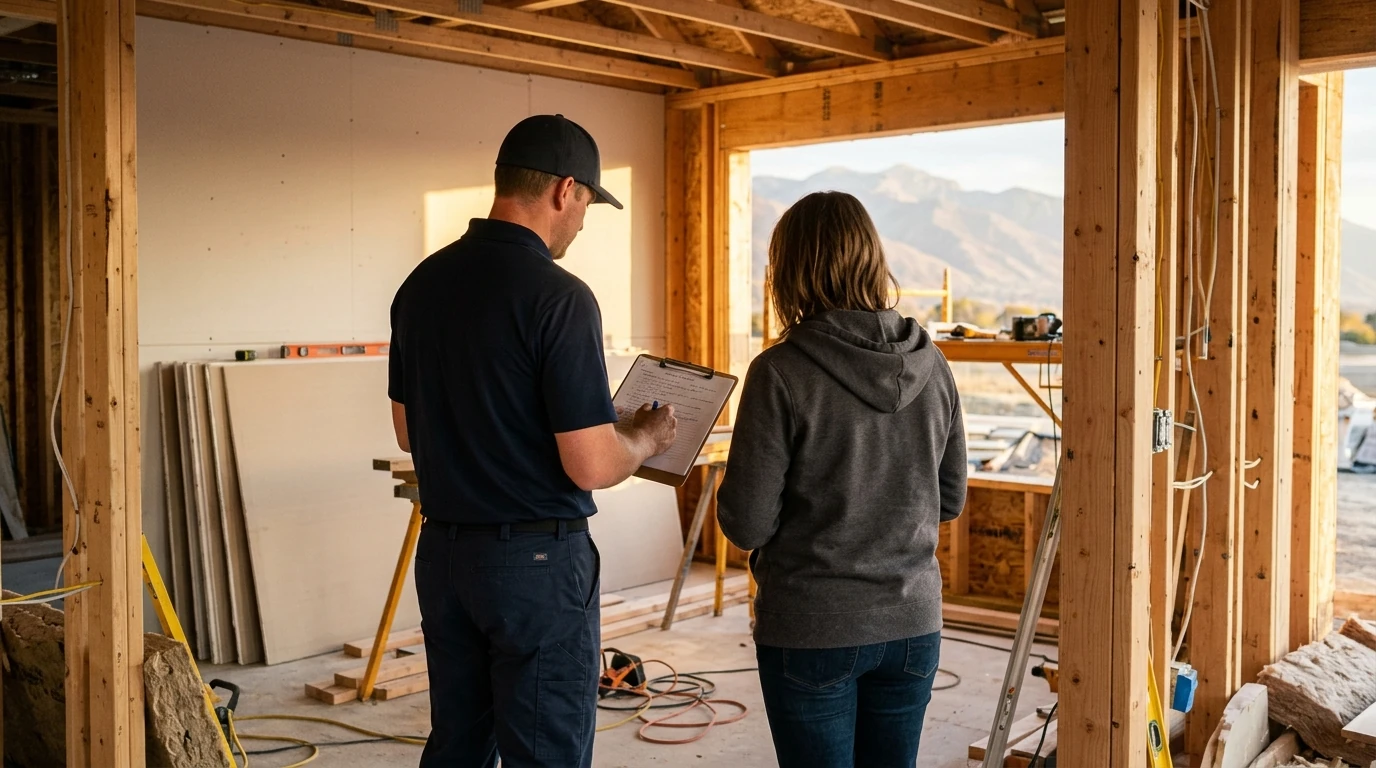
Once the water is extracted or the soot and smoke residue are cleaned up, you’re left with torn-out drywall, charred framing, or a subfloor that’s been pulled up. That’s the rebuild phase, and it’s a different kind of work than mitigation. Whether your house sits on the benches below Mount Timpanogos or closer to Art Dye Park, the framing lumber, drywall specs, and City of American Fork permit requirements are the same, and the decision in front of you is: who actually does the rebuild, and how do you know they’ll do it right.
Do I have to use the same company for the rebuild as for mitigation?
No. Homeowners can hire any licensed contractor for the reconstruction phase, separate from whoever handled the water extraction or soot cleanup. Mitigation and rebuild are billed and scoped differently, and your insurance policy doesn’t require you to keep the same crew for both.
There’s a practical upside to staying with one company, though: the firm that dried your structure or cleared the smoke damage already has the moisture readings, the demolition photos, and the drying or cleaning report your adjuster used to approve the mitigation claim. That paper trail is what the rebuild scope gets built from. If you switch contractors mid-stream, make sure that documentation actually gets handed over, not just summarized secondhand.
If a company tells you reconstruction is subcontracted out, ask who the sub is, whether they’re licensed in Utah, and who’s accountable if the schedule slips. There’s nothing wrong with subcontracted trades (electrical and plumbing rough-in almost always are), but the general contractor of record should be clearly named in your written agreement.
What should be in writing before reconstruction starts?
A written scope that matches your insurance company’s line-item estimate, a start and completion date, and a warranty on the workmanship, before a single stud goes up. Verbal promises don’t hold up when a timeline stretches from six weeks to four months.
Specifically, get these in writing:
- A line-item scope of work that mirrors your adjuster’s estimate (most Utah insurers and contractors work from Xactimate-format pricing, so the numbers should line up or the discrepancy should be explained in writing).
- A payment schedule tied to completed phases, not a lump sum up front.
- A written warranty period on the rebuild work itself, separate from manufacturer warranties on materials.
- Who pulls the permit. American Fork requires a building permit for structural framing repair, electrical, and plumbing work; your contractor should pull it, not leave it to you.
- A named point of contact who updates you on schedule changes, especially if the drywall or lumber the estimate was based on is back-ordered.
Before signing anything, you can confirm a Utah contractor’s license is active through the Utah Division of Professional Licensing. It takes about two minutes and it’s worth doing for any contractor you haven’t worked with before.
What happens when you call for a rebuild estimate?
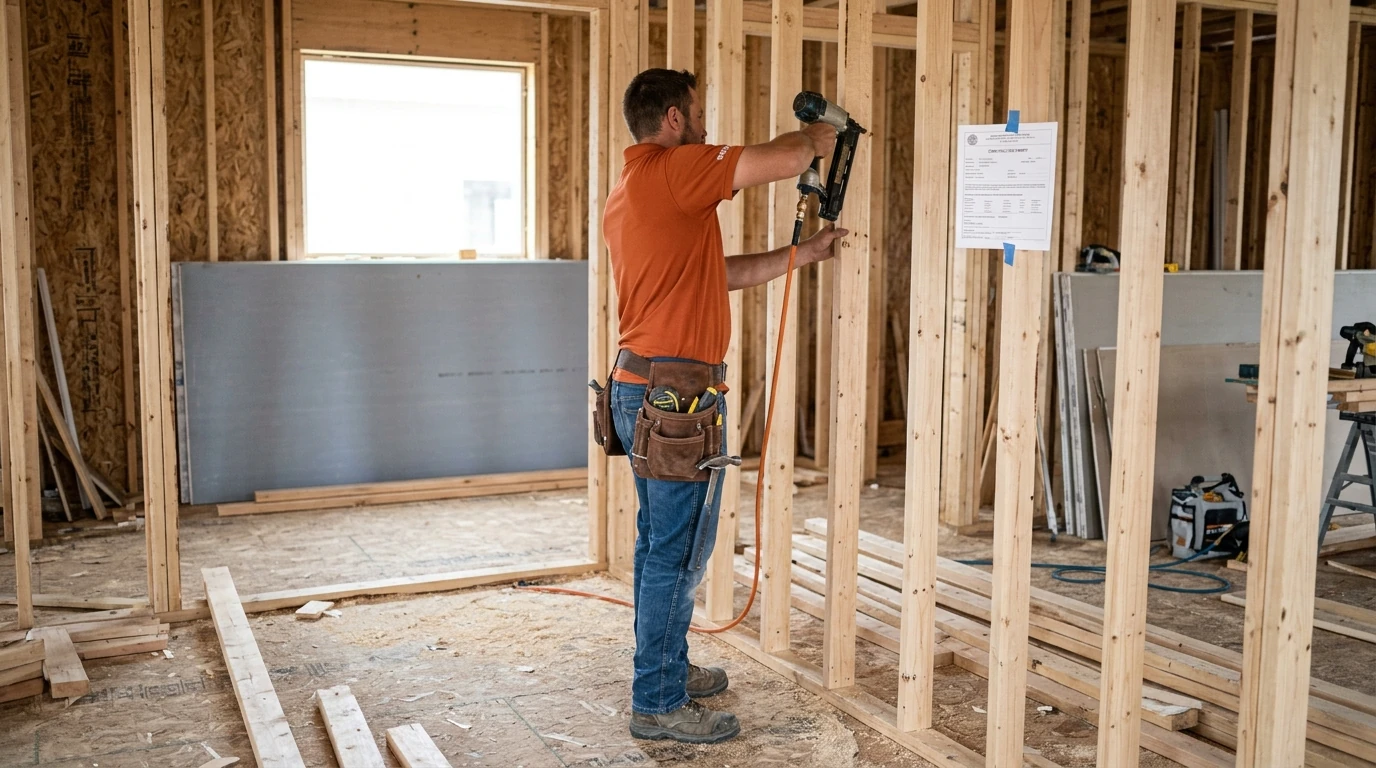
A contractor walks the property, compares the damage against the mitigation report, and gives you a written scope and schedule, usually within a few business days of the site visit. If mitigation already happened, bring that report and your adjuster’s estimate to the walkthrough; it’s the fastest way to get an accurate number instead of a guess.
For a single room (a kitchen after a dishwasher line failed, a bedroom after a space heater fire), a straightforward rebuild often runs three to six weeks once permits clear and materials are on hand. A whole-floor or whole-house rebuild after a major structure fire can run four to six months, driven mostly by permit review, material lead times, and how much of the home has to come down to the studs.
Your insurance company stays involved through this phase too. The Utah Insurance Department’s home claims guidance is a useful plain-language reference if you want to understand how supplemental claims work when the rebuild scope turns up damage the original estimate missed, which happens more often than homeowners expect once walls are opened up.
For the mitigation side of a fire loss specifically, including how smoke and soot get cleared before rebuild work even starts, our fire damage restoration process post walks through that phase step by step.
If you’re still in the decision stage, get at least one written scope before demolition goes further than it needs to. A contractor who won’t put the schedule and warranty in writing before starting is telling you something. Call FIX Restoration at (801) 930-9750 for a written rebuild scope, or request an estimate online.
About Scott Noland and this guide
This guide was prepared by Scott Noland with input from the reconstruction team at the American Fork-based restoration and general contracting company founded in 2012. The company is licensed and insured and handles water damage restoration, fire damage restoration, general contracting, and reconstruction across Utah County, from the initial mitigation call through the final framing and drywall rebuild.